
And it's still true. We don't need attack rolls to play D&D, or any other version of a tabletop RPG. Attack rolls often just slow down the inevitable. The number of sides on that d20 often lead to many misses that are not due to the enemy's skill or evasiveness, but due to plain crappy luck.
Take that luck partially out by rolling only damage, and you have a combat scenario where at least something happens every turn. Maybe just a scratch, but at least a character getting scratched by a near miss is WAY more interesting than a character getting plain ol' missed.
However, you can also play with attack rolls, and still have great combat. The difference comes from how you conceptualize and abstract what an "attack roll" means in your game, and what you encourage and expect from your players during a fight.
For my money, having a high bonus to attacking should translate into a high bonus for grappling, tripping, punching, kicking, disarming, bull rushing, and so on and so forth. The players are adventurers, after all. They are not walking into that dungeon with a bow and arrow, and knowing that if they lose it they are useless. (Or at least, they shouldn't be, and if your system makes it so they are useless without their weapon of choice, your system sucks. Sorry, but it's true.)
So first things first, you've got to get rid of all this combat maneuver/ grapple check/ special attack action nonsense. Combat is combat, whether you have a sword in your hand, or a banana. If your character has the cojones (or whatever the female equivalent should be, which unfortunately seems not to exist) to call him- or herself an adventurer, then they better be able to handle themselves in a fight. Streetfight, magic-fight, sword-fight, tentacle-monster fight, whatever. No need to micromanage your character's specific ability is in every facet of battle.
Now don't get me wrong, if you want your character to have a bonus to a particular fighting style, that is super awesome. But outside of that, isn't it just easier if we assume that a fighter is equally good at all kids of fighting until they become really good at one or two they prefer? Why bother making all these calculations about particular choices in combat? Just use the same bonus for everything! Make everything a regular attack roll.
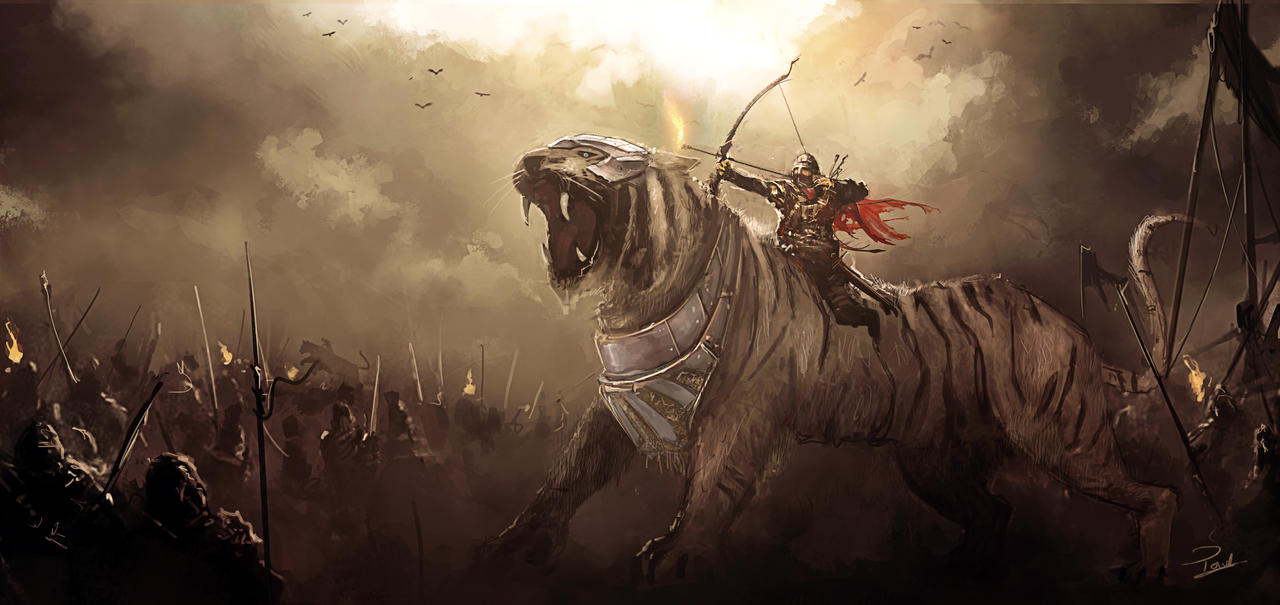 |
| Mounted archery roll? Ha! I scoff at thee! |
You want to tackle your opponent to the ground? Make an attack roll.
You want to grab your opponent and fling them over the castle wall? Attack roll, baby!
You want to shoot your arrow into an opponent's knee and knock them prone? Aaaaaaattack roll!
You want to feint one way and cause one of the enemies currently flanking you to accidentally hit the other guy current flanking you? That's an easy one, just roll me an attack roll!
And here is the great thing: not only can all of these rolls just be regular attack rolls, but all of these rolls can also be rolled against regular ol' Armor Class.
Consider: that base of 10 that every character gets for an AC in most d20 games, what is it? I'll tell you: it is the assumed ability of any combatant to avoid bodily harm during a fight. Everybody gets it. A straight 45% boost in your ability to not get stabbed. Then, most games also add some kind of evasive bonus from a high Dexterity. That is rather self-explanatory. Only once both of those things are said and done is armor factored in. Armor isn't even that big a part of your Armor Class. Most of your AC is simply your finely tuned sense of when to get the hell out of the way.
So yeah, the guy in plate armor is more likely to avoid a bullrush than a guy in leather armor. Does that make perfect sense? No. But is it totally baseless when it comes to the assumptions of your game? Absolutely not! It's harder to knock someone in armor down, because they are heavier and not as easily unbalanced with pressure to their soft parts and such. Armored opponents are not as easy to disarm, since their hands are frequently protected with something. Armored opponents are harder to grab and fling because armor doesn't bunch up nicely in your hand and give you good leverage over someone like a regular shirt does.
I mean, whatever logic I throw out there, someone will be able to find counter-logic that makes this system of doing things seem unreasonable. But hey, at least my unreasonable system makes combat go fast, and isn't as hard to learn.
 |
| Good luck doing that in a more complex system... |
